Shiftaan
A shift and earnings tracker for security guards who work for more than one company.
- Role
- Founder, product designer and builder (solo)
- Launched
- September 2026
- Platform
- Mobile-first web app
- Tools
- Figma, Figma Make, React, TypeScript
The business problem
Many part-time security guards work shifts for several companies, each with its own rate, pay cycle and habit of paying late. Most track it in the Notes app, a rota screenshot or from memory. If a shift isn’t logged, nobody notices when it isn’t paid.
I work security shifts myself, so I had the problem before I had the product. I first fixed it with a spreadsheet of shifts, totals and companies. It worked for me, but nobody else would set up formulas on a phone between shifts.
UX challenges
- Speed: a shift has to be logged in under 30 seconds, often at the end of a long night.
- Real payment states: pay isn’t just paid or unpaid. It can be awaiting, partial, overdue or disputed.
- One clear picture: hours, expected pay and money owed across every company in one place.
- Personal, not corporate: built for the guard, not the employer’s rota.
Design process
I designed the flows in Figma, starting with logging a shift, because everything else depends on it. Wireframing the log-a-shift flow first kept the form to the essentials: site, times, break and rate, with expected pay calculated for you.
I generated React and TypeScript code with Figma Make, then spent my own time on what decides whether people keep using it: saving data reliably, edge cases and getting it online. My first hosting attempt gave a blank page, an early lesson in the gap between “works on my machine” and “works for users”.
The solution
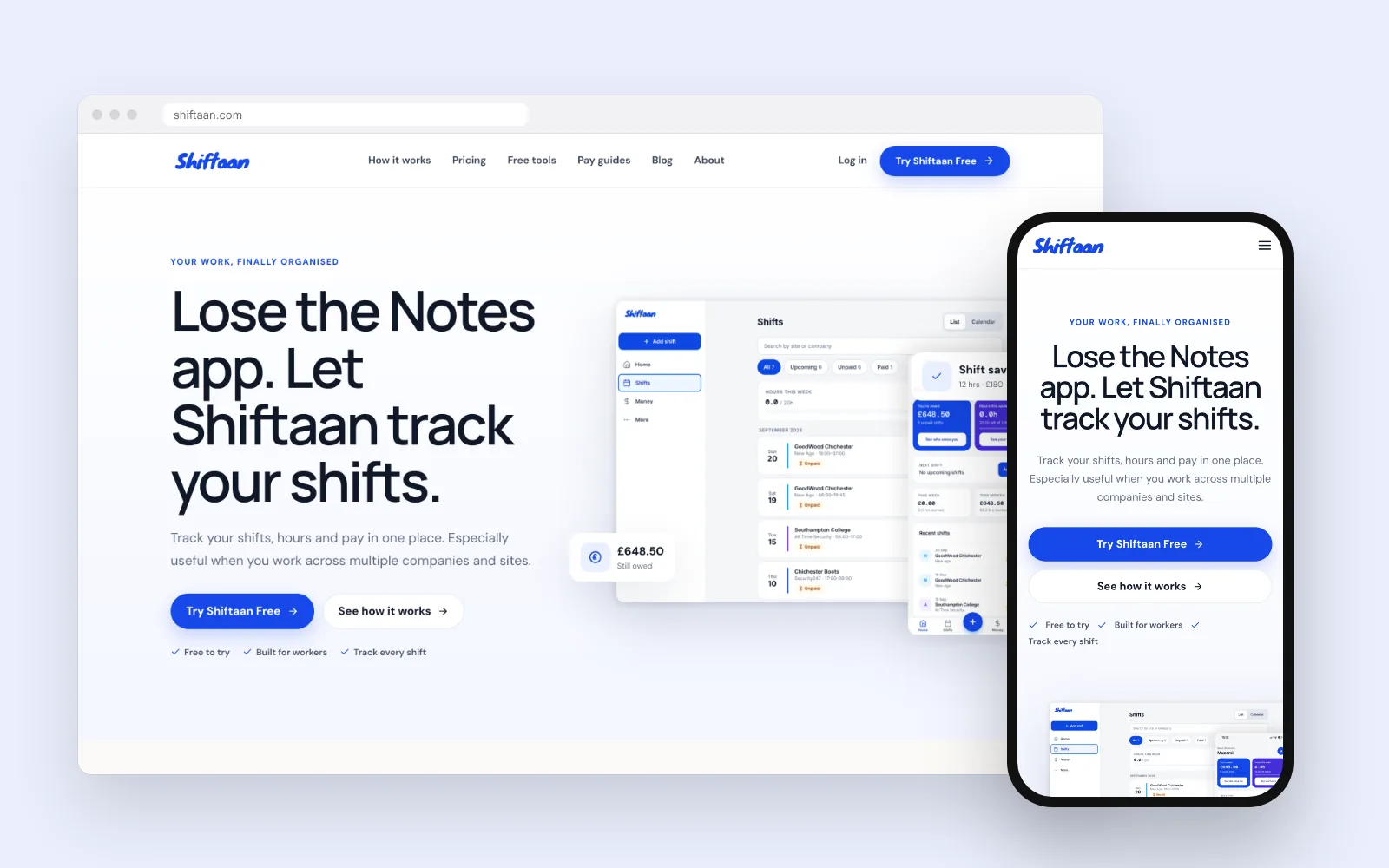
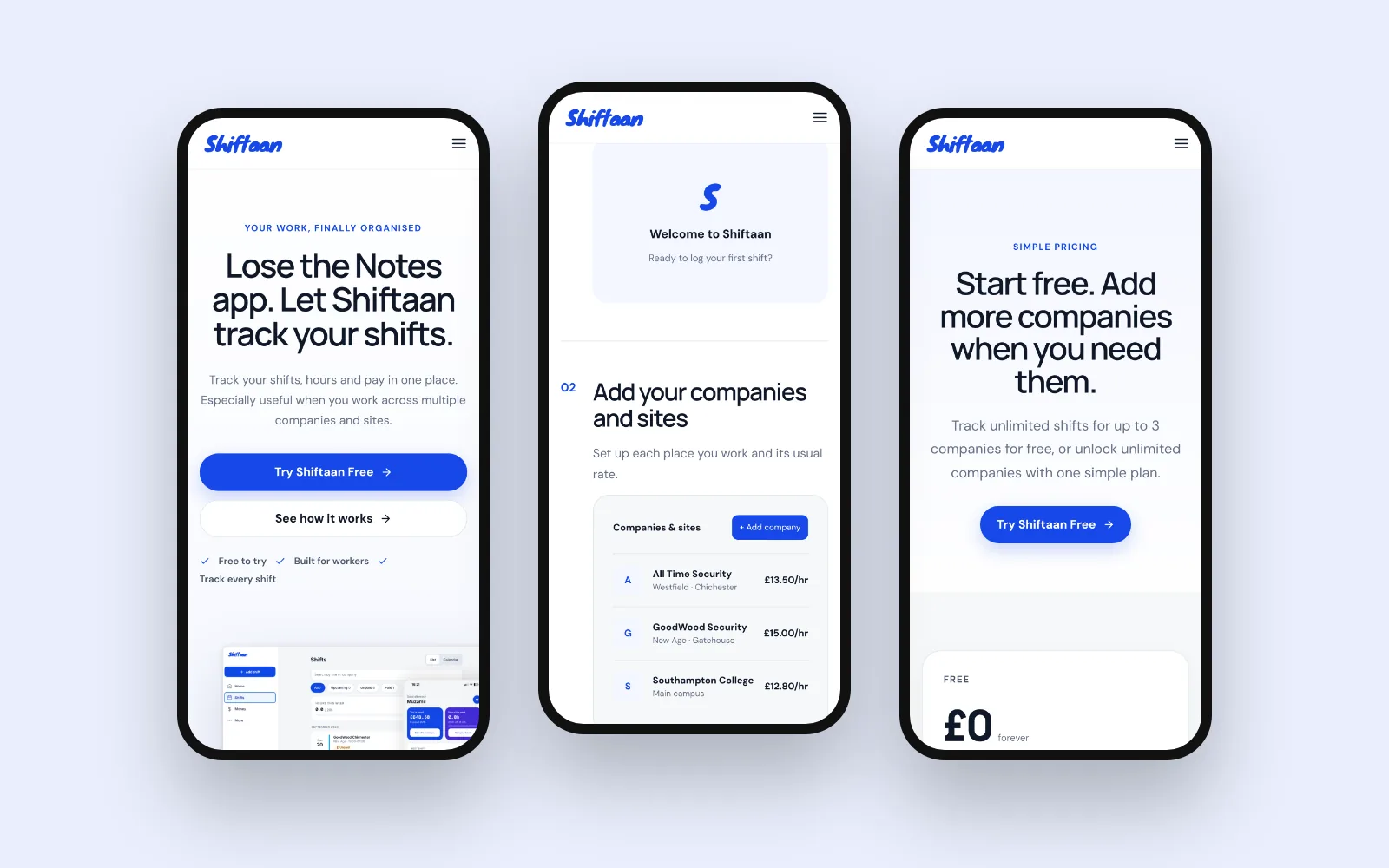
Shiftaan answers two questions: how many hours have I done? and who still owes me money? Guards add their companies and sites once, log shifts in seconds and see earnings and outstanding pay on a single dashboard. Every shift carries a payment status, so unpaid money never goes missing.
Results and learnings
Shiftaan went live at shiftaan.com in September 2026, and I promote it directly to UK guards. It is free to start with up to three companies.
AI-assisted building moved the bottleneck: the interface came quickly, but persistence and hosting were the real work. And a narrow promise travels better. “Know who owes you money” is easier to share than “a shift management app”.