Speculative Futures
From a hive mind to a world where privacy is punished.
- Team
- Team Di-Fi (3 people), MSc User Experience Design, University of Portsmouth
- My role
- Part 1: mixed, shared across the team. Part 2: research and literature review
- Methods
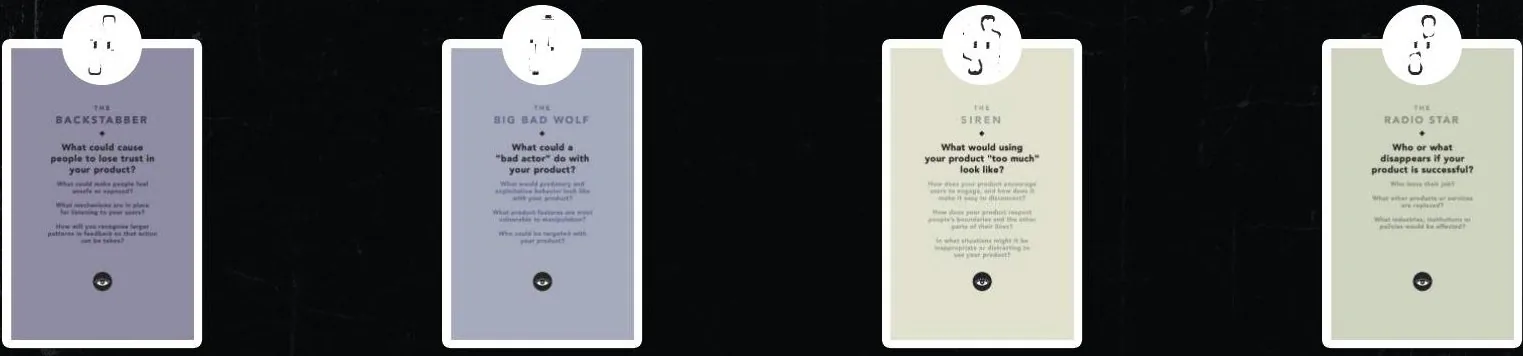
- Design sprint, futures toolkits, pre-mortem, future cones, anti-futures, Tarot Cards of Tech
- Deliverables
- CogniBand concept and prototype; a 2126 dystopia and creepiness framework
The brief
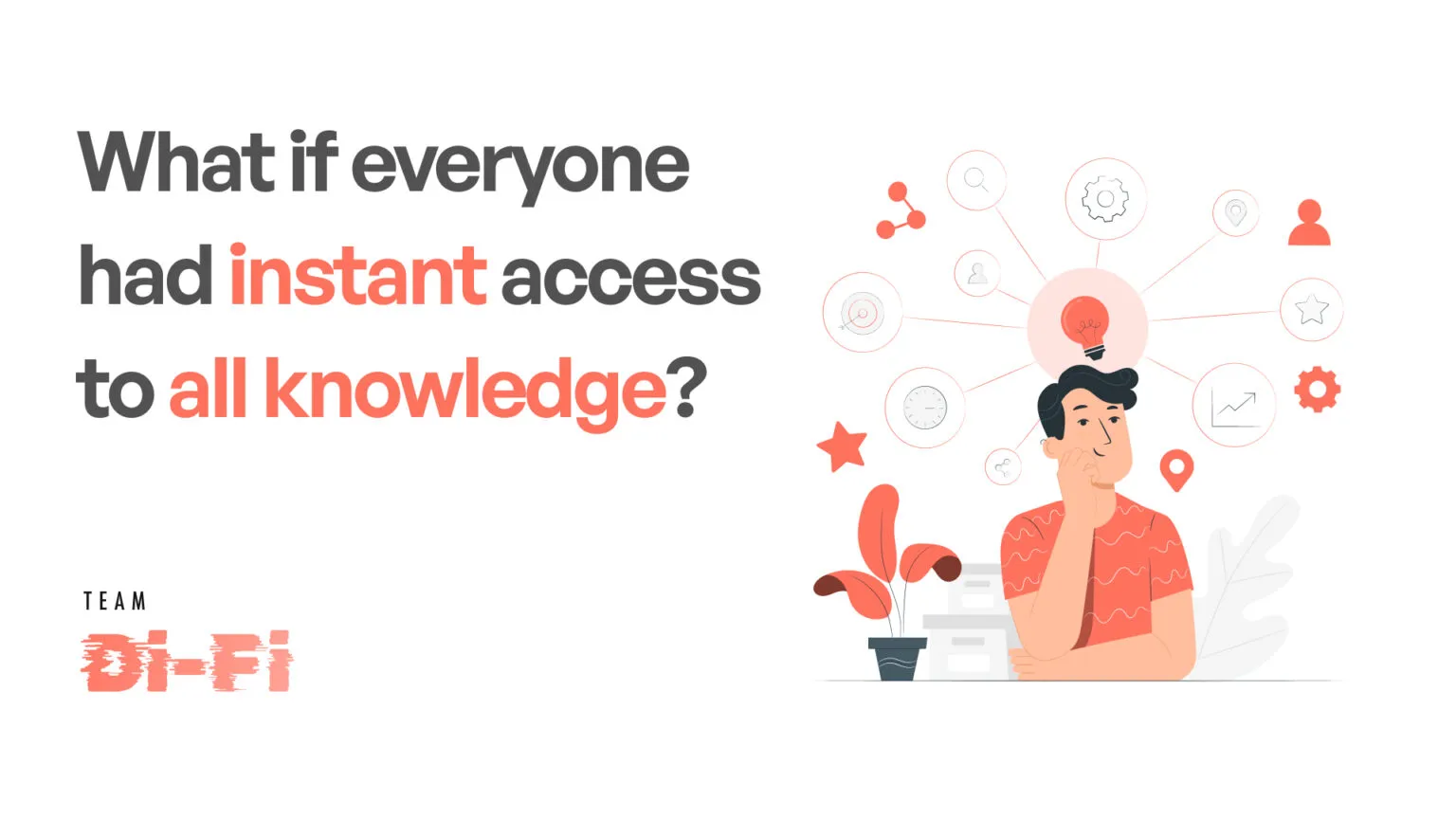
Two assignments, one story. First: imagine a world where everyone has instant access to all knowledge, and design for it. Second: design a dystopia. We asked what would happen if privacy itself became a punishment.
Speculative design isn’t about shipping a product. It tests how decisions made with good intentions can be misused, which is a real UX problem for anyone designing technology today.
Design challenges
- Keep fiction credible: an invented world feels arbitrary unless it is grounded in research.
- Show both sides: instant knowledge brings progress, but also overload, fatigue and lost privacy.
- Make “creepy” concrete: turn a feeling into parts we could design for.
Design process
In Part 1 we ran a four-phase design sprint. We imagined 2075, where everyone is wired into a mandated hive mind that shares all knowledge and the thoughts and feelings of people nearby. A pre-mortem exposed the costs: no emotional privacy, information overload and pressure to conform.
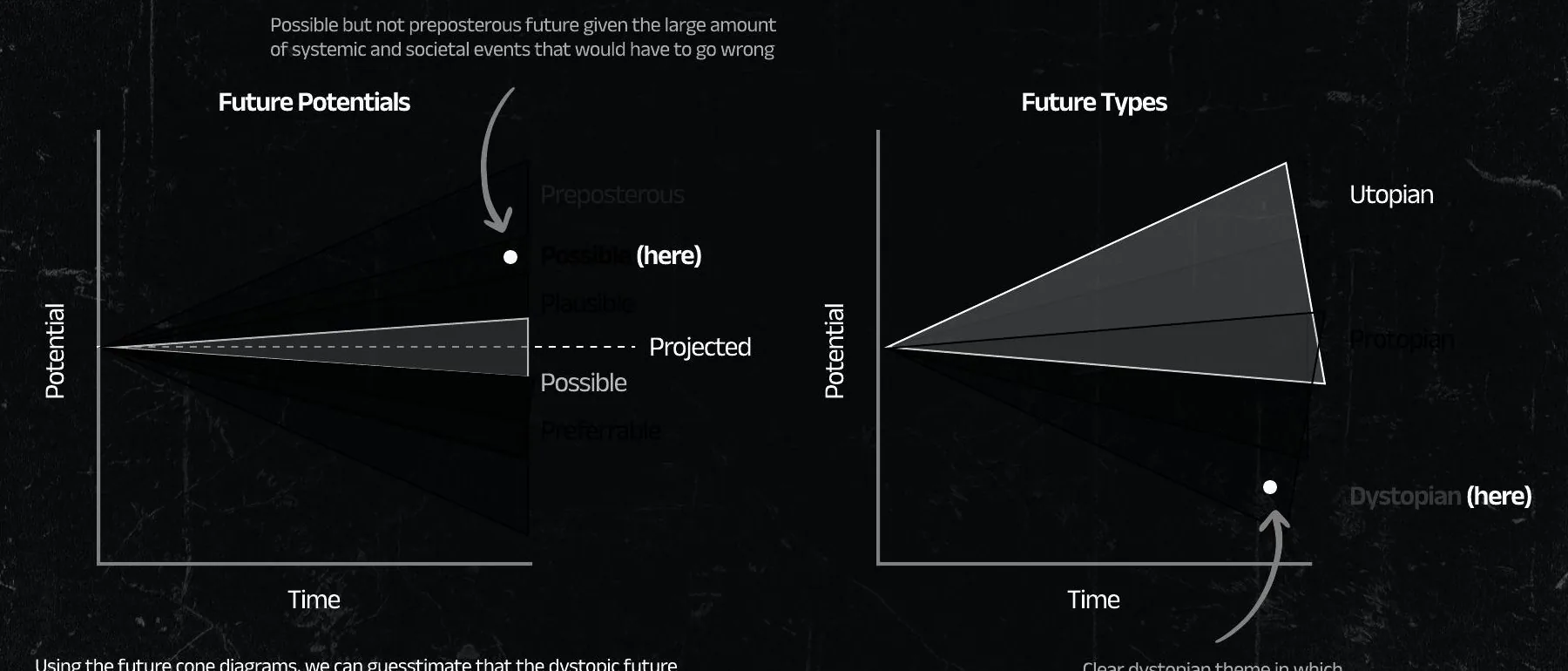
In Part 2 my role was research. I reviewed work by Schneider (2024), Ng & Lin (2024) and Brin (1998) on surveillance and privacy, and used it to anchor the world. Future cones and an anti-futures timeline traced small, plausible steps from 2025 to 2126.
The solution
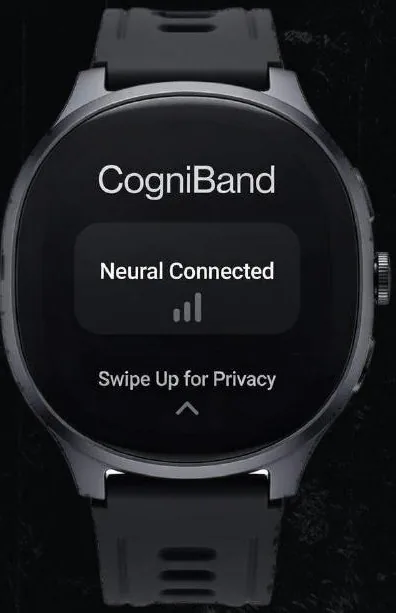
Part 1: CogniBand, a wearable linked to a person’s neural implant. A swipe up enters Privacy Mode, temporarily disconnecting them from the hive mind. We built a cardboard prototype and a high-fidelity watch UI.
Part 2: the dystopia. In 2126, constant visibility is a moral virtue. CogniBand’s own usage data becomes evidence against its users, and people who seek privacy lose social credit, services and work.
What I learned
The dystopia doesn’t come from violence. It comes from convenience, normalisation and small design choices. Good speculative design is evidence-led, assumptions are design decisions, and designers are never neutral: what we build shapes who holds power.
Illustrations: Storyset (opens in a new tab).